There's a moment many owners recognise: your dog lies down a little more carefully than they used to, or takes a few stiff steps when they get up in the morning. Older dogs sleep more, and the bed they sleep on starts to matter a lot more too.
Most orthopaedic beds focus on one thing: cushioning. Here's what to look for in a bed for a senior dog, why we think grounding deserves a place at the top of the list, and a few simple changes around the home that help.
Signs your dog's joints are stiffening
- Slow or careful lying down, or circling for longer before settling
- Stiffness after a long sleep that eases once they're moving
- Hesitating at stairs, the car or the couch
- Lagging behind on walks, or wanting to turn back sooner
- Licking at a particular joint
- Changes in mood, such as being less keen to play or more irritable when touched

Start with your vet
Joint stiffness in older dogs is common, and there's a lot your vet can do to help, from pain relief to joint supplements and weight management. Book a check-up if you notice any of the signs above. A good bed supports your dog's comfort every day, but it doesn't replace veterinary care.
Why grounding matters for stiff joints
Stiff, sore joints in older dogs usually come with ongoing, low-grade inflammation. Cushioning takes pressure off those joints, but it doesn't do anything about the inflammation itself. This is where grounding comes in, and it's the main reason we designed our bed the way we did.
Grounding, or earthing, means direct contact with the earth's surface, or with a conductive surface connected to it. Researchers propose that this contact lets the body take up free electrons from the earth, and that these may help neutralise some of the reactive molecules involved in inflammation. A 2015 review in the Journal of Inflammation Research brought together the evidence for this, including changes seen in markers of inflammation, pain and recovery (Oschman, Chevalier & Brown, 2015).
Several small studies point the same way:
- Less soreness after strain. In a double-blind pilot study, people who slept grounded after strenuous exercise reported less pain and showed differences in blood markers of muscle damage and inflammation compared with a sham-grounded group (Brown, Chevalier & Hill, 2010). A larger follow-up found grounding significantly reduced a blood marker of muscle damage (Brown, Chevalier & Hill, 2015).
- Better sleep and less pain. Adults with poor sleep and pain who slept grounded for eight weeks showed improvements in night-time cortisol, and most reported better sleep and less pain (Ghaly & Teplitz, 2004).
- In animals. Rats given an earthing mat slept more deeply and spent less time awake (Ye et al., 2024), and stressed rats with an earthing mat showed lower activity in the stress-hormone pathway (Park et al., 2023).
Dogs share the same core systems for inflammation, stress and sleep, and an older dog spends 12 or more hours a day resting. A grounding bed turns all of that rest time into time connected to the earth, without any extra effort from you or your dog.
To be clear about the evidence: the studies are small, most are in people, and there are no published grounding trials in dogs yet. Grounding isn't a treatment for arthritis, and it works alongside your vet's care, not instead of it. But for owners looking for something more than cushioning, it's the reason to choose a grounding bed over a standard orthopaedic one.

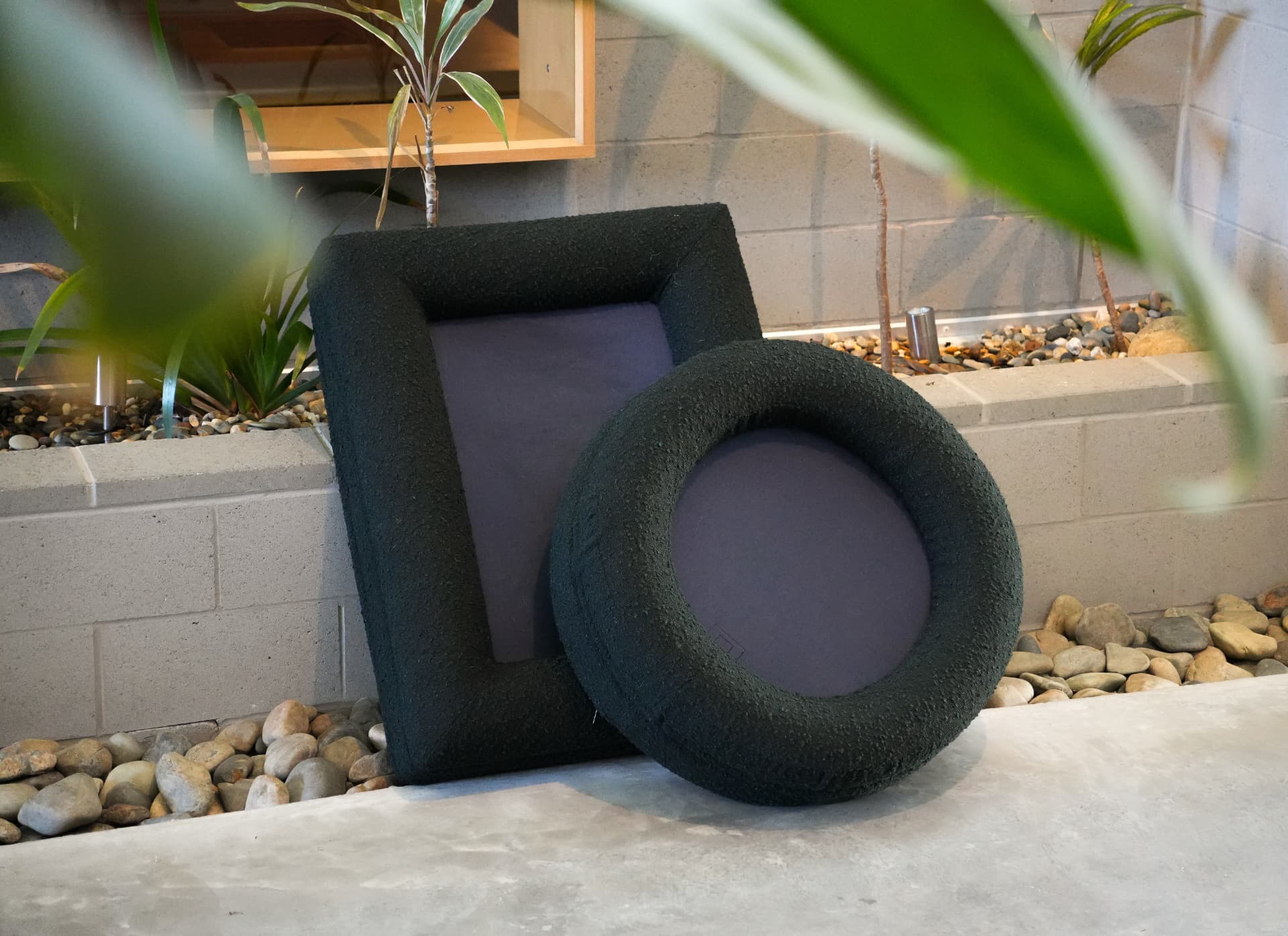
The Grounding Heart Pet Bed. Orthopaedic comfort with built-in grounding.
Shop the bedWhat makes a good bed for an older dog
Grounding built in. Look for conductive fabric right where your dog lies, so their paw pads, nose and belly are in contact with it. Fur insulates, so the conductive layer needs to be on the sleep surface, not buried inside. The Grounding Heart Pet Bed has grounding fabric in the sleep surface, connected to the earth pin of a correctly wired wall socket. It draws no electricity.
Deep, supportive foam. Thin cushions and loose fibre fill flatten quickly, leaving hips and elbows pressing into the floor. Orthopaedic memory foam spreads your dog's weight evenly and keeps them off the hard surface. Our bed uses a layer of orthopaedic memory foam for support, topped with a softer cloud-comfort memory foam layer.
A bolster to rest their head on. Many older dogs like to rest their head or lean against something as they sleep. A raised, padded edge gives them that support. Our bed has a memory foam headrest bolster built in.
An easy way in and out. Look at how high your dog has to step to get in, and how stable the bed is underfoot. A non-slip base stops the bed sliding on timber or tiles as your dog gets up.
Waterproofing. Some older dogs have the occasional accident. A waterproof layer protects the foam so the bed stays fresh and supportive for longer. Ours fully encases the inner bed.
A washable cover. A removable cover you can machine wash makes keeping things clean easy. A spare cover means the bed is never out of action.
Warmth. Cold can make stiff joints feel worse. A bed with soft, insulating fabric, placed out of drafts, helps.
Where to put the bed
- Somewhere warm and away from drafts and air-conditioning vents
- On a level surface, close to where the family spends time, so your dog doesn't have to choose between comfort and company
- Away from stairs, so they don't need to climb to reach it
- Near a power socket for the grounding cord, with the cord kept out of the way. Check the socket with a socket tester first.
Other everyday helps
- Rugs or runners on slippery floors give better grip.
- Ramps or steps for the car and the couch save jumping.
- Shorter, more frequent walks keep joints moving without overdoing it.
- A healthy weight takes pressure off sore joints. Ask your vet for a target.
- Time on grass. Let your dog lie on the lawn on a warm day. It's grounding the natural way.
What to watch for
If you try a grounding bed, allow six to eight weeks and keep an eye on:
- How easily your dog gets up after a long sleep
- How quickly they settle
- How keen they are on walks and play
- Where they choose to sleep
Every dog is different, and experiences vary. Read What is grounding for dogs and cats? for more on how grounding works.
Frequently asked questions
Can grounding help my dog's stiff joints? Grounding may support a healthy inflammatory response, which is why we build it into our bed. Studies in people and laboratory animals have found changes in inflammation, pain and sleep, though there are no published trials in dogs yet. It works alongside your vet's care, not instead of it.
Is memory foam good for older dogs? Yes. Memory foam spreads weight evenly and stops joints pressing into the floor, which makes it a popular choice for senior and large dogs.
What's the difference between a grounding bed and a regular orthopaedic bed? Both cushion your dog's joints. A grounding bed adds a conductive layer that connects your dog to the earth while they rest, which is linked in research to effects on inflammation and sleep.
Should an older dog's bed be firm or soft? Supportive rather than squishy. A firm orthopaedic base with a softer top layer gives both support and comfort.
What size bed does a senior dog need? Older dogs often like to stretch out to take pressure off their joints, so choose a bed they can lie flat in. See How to choose the right bed for your dog or cat.
Can a new bed help my dog's arthritis? A supportive grounding bed can make rest more comfortable, but arthritis needs veterinary care. Talk to your vet about a treatment plan.
References
- Oschman JL, Chevalier G, Brown R. The effects of grounding (earthing) on inflammation, the immune response, wound healing, and prevention and treatment of chronic inflammatory and autoimmune diseases. Journal of Inflammation Research, 2015.
- Brown D, Chevalier G, Hill M. Pilot study on the effect of grounding on delayed-onset muscle soreness. Journal of Alternative and Complementary Medicine, 2010.
- Brown R, Chevalier G, Hill M. Grounding after moderate eccentric contractions reduces muscle damage. Open Access Journal of Sports Medicine, 2015.
- Ghaly M, Teplitz D. The biologic effects of grounding the human body during sleep as measured by cortisol levels and subjective reporting of sleep, pain, and stress. Journal of Alternative and Complementary Medicine, 2004.
- Ye et al. International Journal of Molecular Sciences, 2024. Earthing mat and sleep architecture in rats.
- Park et al. Biomedicines, 2023. Earthing mat and anxiety-like behaviour in stressed rats.