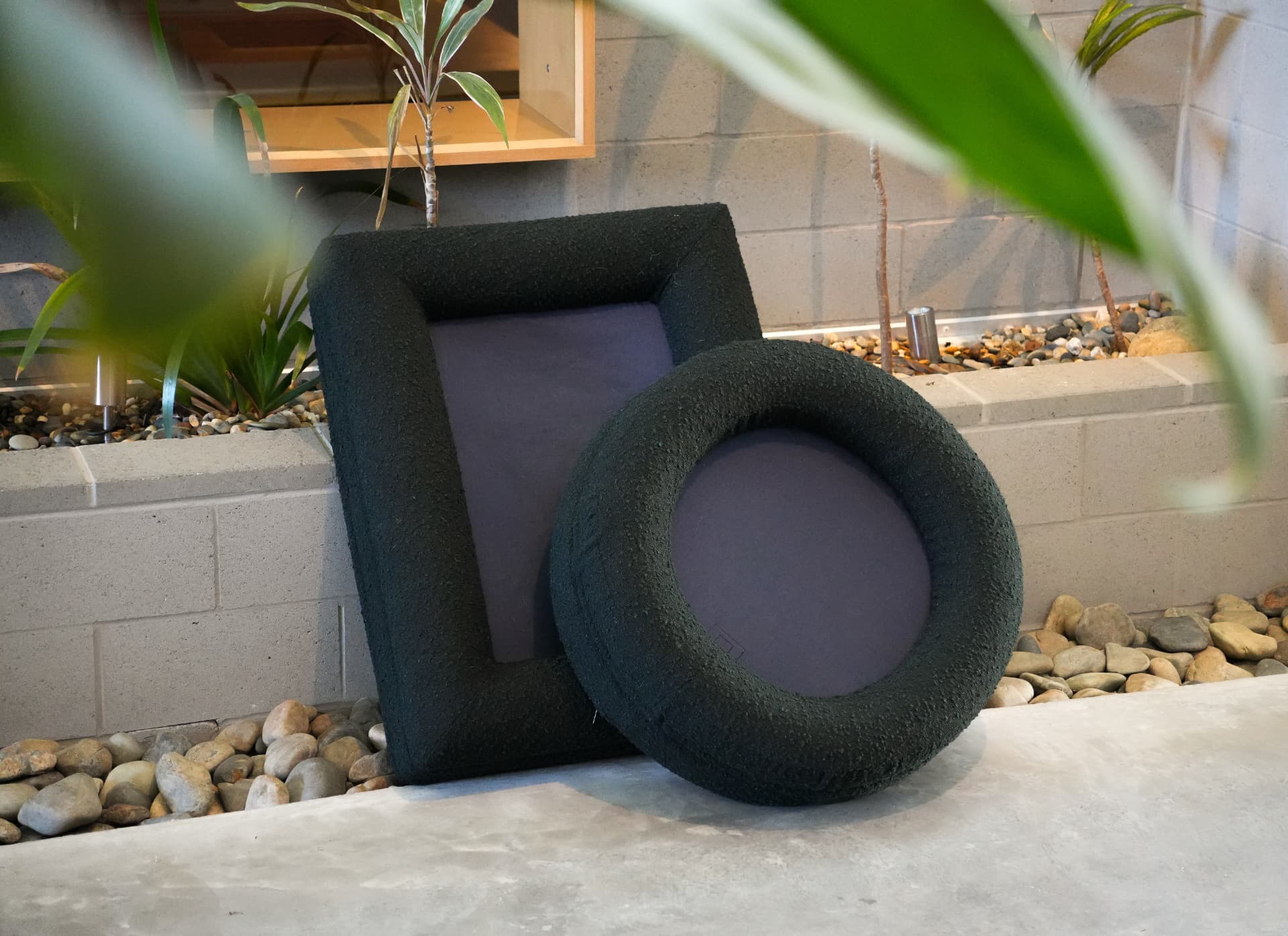
If you've looked into grounding for your pet, you've probably seen two options: a flat grounding mat or a grounding pet bed. Both connect your pet to the earth. The difference comes down to one thing: whether your pet will actually lie on it.
How both work
A grounding mat and a grounding bed work the same way. Each has a conductive surface connected by a cord to the earth pin of a correctly wired wall socket. When your pet's skin touches the conductive surface, they're connected to the earth, just as they would be lying on grass. Neither uses electricity.
Because fur insulates, contact happens through paw pads, nose and belly. Whatever you choose, the conductive surface needs to be where those parts of your pet rest.

Why a mat on its own often goes unused
Pets choose where they sleep. They look for somewhere soft, warm, safe and familiar. A thin mat on the floor doesn't tick many of those boxes, so many pets walk straight past it to their usual bed or the couch.
Some owners try laying a mat inside an existing bed, under a blanket. That adds layers between your pet and the conductive surface, and a mat can slide around or bunch up as your pet circles and digs.
Comfort is half the job
The most effective grounding surface is the one your pet uses every day. A grounding bed builds the conductive fabric into a bed your pet wants to sleep in:
- Orthopaedic memory foam for support
- A soft cloud-comfort foam layer and a headrest bolster
- A soft bouclé cover
- A waterproof encasement and a non-slip base
That means your pet gets the connection during the 12-plus hours a day they already spend resting, without you having to coax them onto a mat.
The Grounding Heart Pet Bed. Orthopaedic comfort with built-in grounding.
Shop the bedGrounding bed vs grounding mat at a glance
| Grounding pet bed | Grounding mat | |
|---|---|---|
| Comfort | Orthopaedic foam, bolster, soft cover | Thin, flat surface |
| Will your pet use it? | Yes, as their main bed | Often ignored, or needs a blanket on top |
| Conductive layer | Built in where your pet lies | Depends where it's placed |
| Stays in place | Non-slip base | Can slide or bunch |
| Protection | Waterproof encasement, washable cover | Varies |
| Best for | Everyday rest at home | Travel, crates, short-term use |
When a mat makes sense
A mat can still be useful:
- For travel, rolled up in the car or for a weekend away
- In a crate or carrier, where there isn't room for a full bed
- Alongside a grounding bed, in a second spot your pet likes
And if your dog or cat sleeps on your bed at night, a grounding sheet connects you both at the same time. You can find our grounding sheet for people at groundingheart.com.
Setting up a grounding bed
- Place the bed where your pet already likes to rest.
- Check the wall socket with a socket tester.
- Connect the cord to the bed and plug it into the socket's earth connection.
- Run the cord out of reach of chewing.
For the full safety checklist, read Is a grounding bed safe for pets?
Frequently asked questions
Can I put a grounding mat in my dog's existing bed? You can, but extra layers like blankets reduce skin contact, and the mat may move around. A bed with the conductive fabric built in avoids both problems.
Does my pet need to touch the bed directly? Yes. Contact happens through paw pads, nose and belly, so avoid covering the sleep surface with thick blankets.
Is a grounding bed better for cats? Cats are particular about where they sleep. A round grounding bed placed in a warm spot they already like is far more likely to be used than a flat mat.
Do I need both? No. For most pets, a grounding bed in their favourite spot is all you need. A mat is a handy extra for travel.